Why Is My Paint Peeling or Bubbling? Common Causes
Peeling or bubbling paint is frustrating, especially when your home was painted relatively recently. You might notice paint lifting around a window, bubbles forming on an exterior wall, or patches of paint coming off a bedroom ceiling. Whatever the location, the first question is usually the same: What went wrong?
Paint failure can happen for several reasons, including moisture, inadequate surface preparation, incompatible coatings, or painting under unsuitable conditions. Sometimes the problem is limited to a small area. In other cases, it can point to a larger issue that needs attention before repainting.
For homeowners in West Chester, Chester County, and the Philadelphia Main Line, changing temperatures, humidity, and seasonal precipitation can all affect painted surfaces. Understanding the cause is the first step toward a lasting repair.
What Is the Difference Between Peeling and Bubbling Paint?
Although peeling and bubbling can occur together, they don't always have the same cause.
Peeling paint occurs when the coating loses adhesion and begins separating from the surface underneath. It may curl at the edges, flake away in small pieces, or come off in larger sections.
Bubbling paint, also called blistering, occurs when raised pockets form beneath the paint film. These bubbles can appear soon after painting or develop months later, depending on the underlying cause.
Both problems indicate that the coating isn't performing as it should. Simply applying another coat over the affected area usually won't solve the problem. Below we share some of the most common causes for these very common issues.
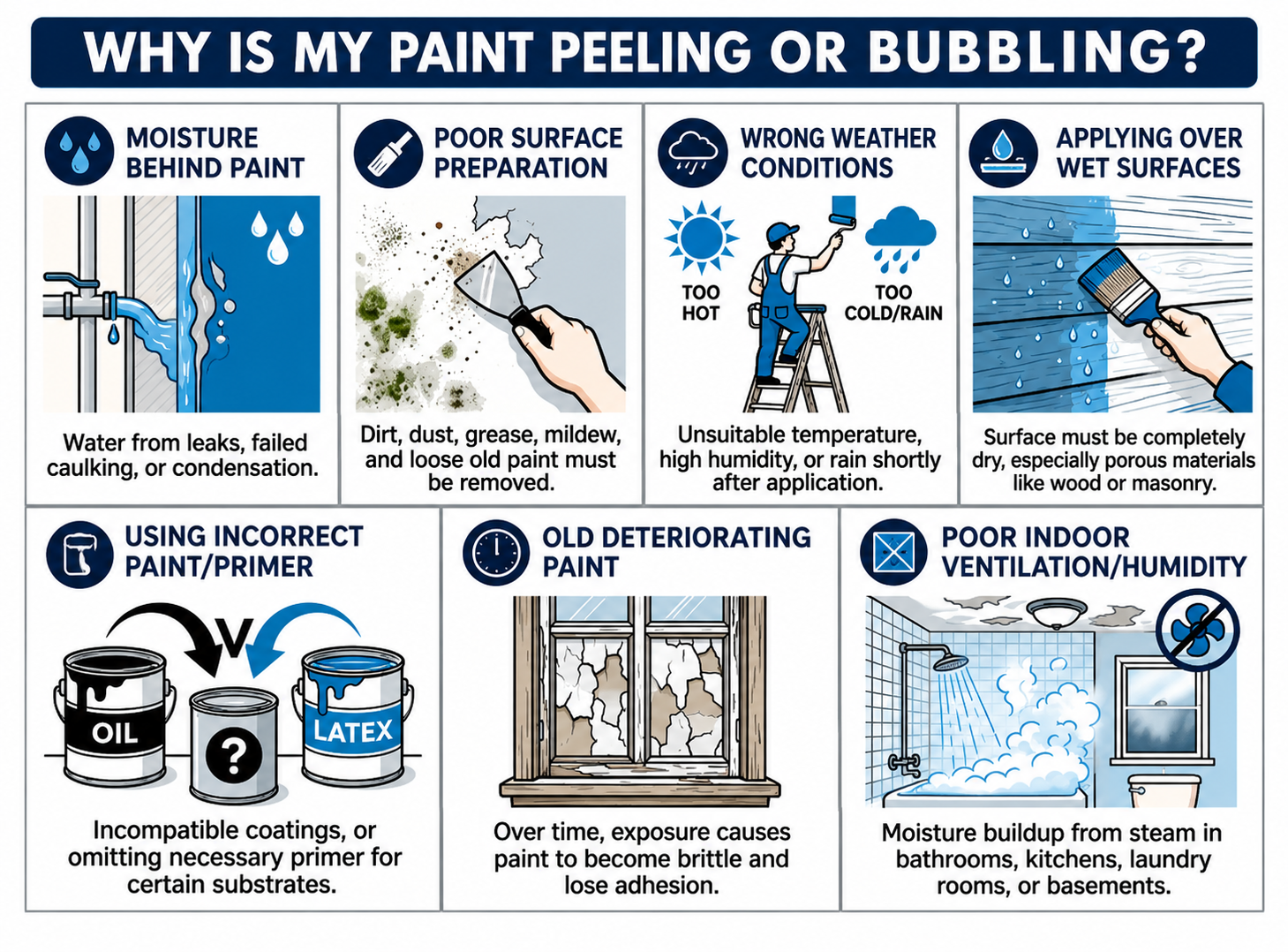
1. Moisture Getting Behind the Paint
Moisture is one of the most common causes of peeling and blistering paint, particularly on exterior surfaces.
Water can enter through damaged caulking, leaking roofs, deteriorated siding, cracks, or poorly sealed joints. Indoors, plumbing leaks, condensation, damp basements, and excessive humidity can contribute to paint failure.
As moisture moves through or becomes trapped beneath the coating, it can weaken the bond between the paint and the surface.
Common warning signs include:
- Peeling paint around windows and doors
- Bubbling on exterior walls
- Paint damage near ceilings or plumbing
- Staining or discoloration
- Repeated peeling in the same location
- Damp or musty areas
If you notice these signs, identify and address the moisture source before repainting. Otherwise, the problem is likely to return.
For additional guidance, Sherwin-Williams explains common causes and solutions in its guide to exterior paint peeling caused by moisture.
2. Poor Surface Preparation
Even high-quality paint can fail when it's applied to a poorly prepared surface. Dirt, dust, grease, mildew, loose paint, and chalky residue can prevent a new coating from adhering properly. Glossy surfaces may also require appropriate preparation before repainting.
This can be a problem when someone paints over an existing finish without thoroughly cleaning, scraping, sanding, or priming as needed.
Exterior surfaces need particular attention because they are exposed to weather, airborne contaminants, and organic growth. Interior surfaces can also have adhesion problems, especially in kitchens, bathrooms, and other areas where grease or moisture accumulates.
Proper preparation depends on the material and the condition of the existing coating. Wood, drywall, stucco, masonry, and previously painted trim don't necessarily require the same approach.
That's why professional painting involves more than choosing a color and applying a fresh coat.
Get the Perfect Finish for Your Home or Business
Let our experts help you choose the right paint. Get your free quote today!
3. Painting in the Wrong Weather Conditions
The weather can affect paint application, drying, and curing. Painting a surface that's too hot, too cold, damp, or exposed to unsuitable humidity conditions can interfere with the coating's performance. Rain or dew shortly after application can also cause problems, depending on the product and conditions.
In Southeastern Pennsylvania,
exterior painting requires attention to seasonal temperature changes and the forecast. A sunny afternoon doesn't automatically mean every surface is ready to paint.
For example, a wall may still be damp after rain, even if the surrounding air feels dry. A surface exposed to direct sunlight may also be considerably warmer than the air temperature.
Paint manufacturers specify acceptable application conditions for their products. Those instructions should guide the timing of the project rather than relying on the calendar alone.
4. Applying Paint Over a Wet or Damp Surface
A surface can look dry without being ready for paint. Wood may retain moisture after rainfall or washing, while masonry and stucco can hold moisture within their porous surfaces. Painting too soon can interfere with adhesion and contribute to blistering or peeling.
Before repainting, the surface needs to be sufficiently dry for the selected primer and coating. This is especially important when painting exterior wood, stucco, masonry, or previously damaged areas. If moisture has been entering the material from behind, simply allowing the outside to dry may not be enough.
A
painting contractor should assess the condition of the surface and determine whether additional drying, repairs, or moisture investigation is needed.
5. Using the Wrong Primer or Paint
Not every paint product is suitable for every surface. Bare wood, repaired drywall, masonry, previously painted surfaces, and stained areas may each require different preparation or priming.
Problems can arise when the coating isn't compatible with the existing finish, when primer is omitted where it's needed, or when a product is used outside its intended application.
For example, a masonry surface may require a primer or coating specifically designed for that substrate. Bare wood may need an appropriate primer to support adhesion and provide a consistent finish.
The best solution depends on the material, the condition of the old paint, and the coating system being applied. Using a premium paint won't compensate for an unsuitable product choice or poor preparation.
6. Old or Deteriorating Paint
Paint doesn't last forever. Over time, exposure to sunlight, moisture, temperature changes, and everyday wear can cause coatings to become brittle and lose adhesion.
You may see fine cracks develop across the surface before paint begins flaking away. On older woodwork, several layers of deteriorating paint may separate from one another.
If the existing coating is no longer firmly attached, applying another layer on top can add weight without fixing the underlying problem.
The loose or failing material needs to be addressed, and the remaining surface should be checked for sound adhesion before repainting.
7. Poor Ventilation and Indoor Humidity
Interior paint can also peel or bubble when moisture builds up inside the home. Bathrooms, kitchens, laundry rooms, and basements are common areas to watch. Steam from showers, cooking moisture, plumbing leaks, and damp basement conditions can all contribute to paint deterioration.
If the paint repeatedly fails in the same room, consider whether ventilation or an underlying moisture problem needs attention.
Using bathroom exhaust fans, improving ventilation where appropriate, and repairing leaks can help address the source. However, persistent dampness or recurring damage may require further investigation before the surface is repainted.
How to Fix Peeling or Bubbling Paint
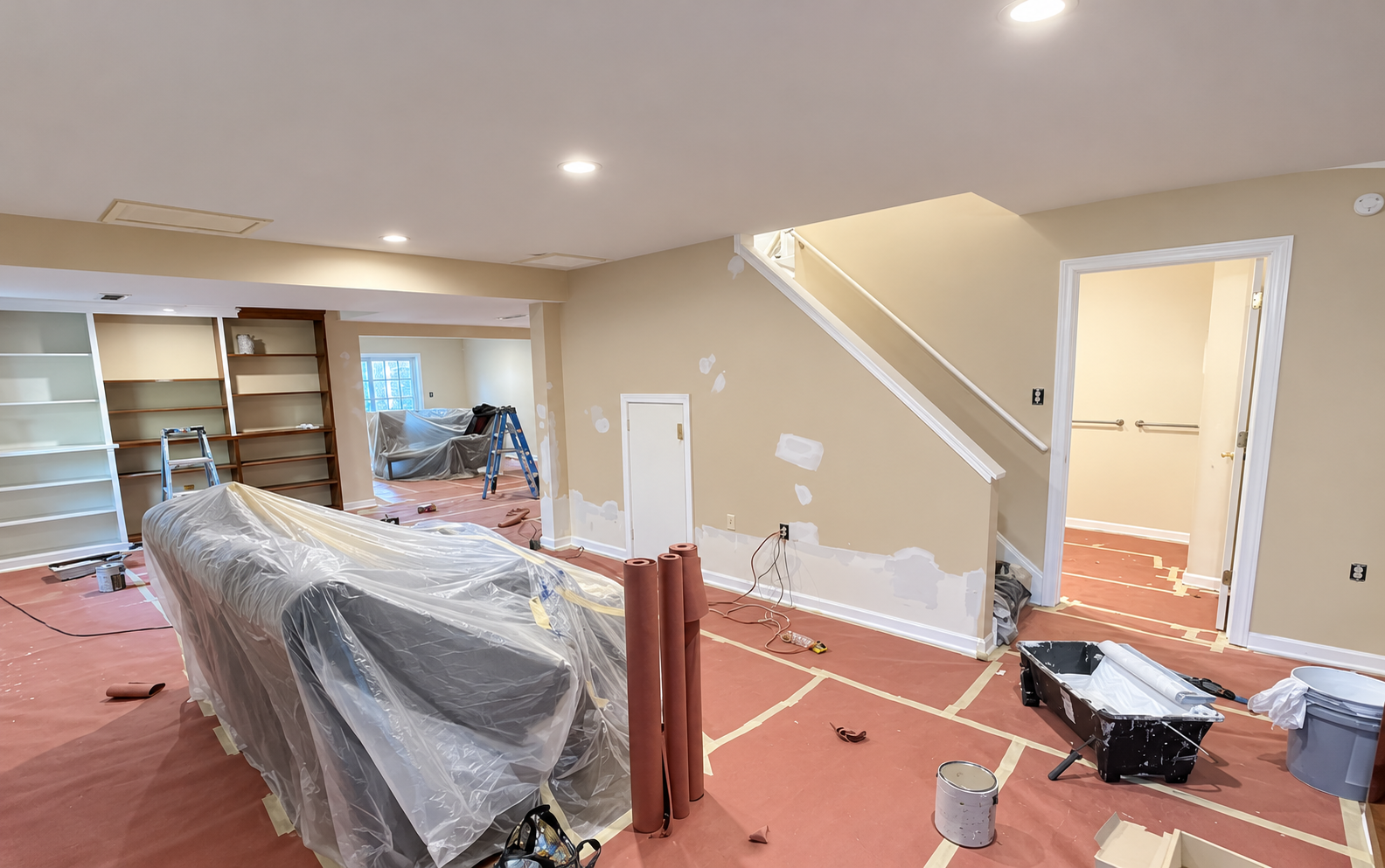
The right repair depends on what's causing the failure. For a small area of damaged paint, the general process may include the following:
- Identify the cause. Check for leaks, moisture, surface contamination, or other conditions that could affect adhesion.
- Resolve underlying problems. Repair leaks, failed caulking, damaged materials, or other issues before refinishing.
- Remove loose paint. Scrape away paint that is no longer firmly attached, using appropriate safety precautions.
- Prepare the surface. Clean, sand, and repair the area as needed to create a sound surface.
- Prime where necessary. Use a primer appropriate for the exposed material and existing coating.
- Apply the finish. Follow the paint manufacturer's instructions for application, drying, and recoating.
Not every paint failure can be fixed with a small patch. If peeling or bubbling covers a large area, affects multiple rooms, or keeps returning, a broader assessment may be necessary.
Important for older homes: If your property was built before 1978, deteriorating paint may contain lead. Scraping and sanding can create hazardous dust. Review the U.S. Environmental Protection Agency's Renovation, Repair and Painting Program guidance for homeowners before disturbing older paint, and use appropriately certified professionals when required.
Can You Paint Over Peeling or Bubbling Paint?
In most cases, no. Painting directly over loose or blistered paint won't restore its adhesion. The new coating may look acceptable at first, but the failing layers underneath can continue to separate. The result may be another round of peeling, bubbling, or flaking.
The better approach is to determine why the paint failed, address any underlying moisture or surface problems, and prepare the area before applying a suitable primer and finish.
If the damage is widespread or the surface condition is uncertain, a professional painting contractor can help determine whether spot repairs are appropriate or a larger repaint is needed.
Preventing Paint Failure on Your Home
Regularly checking painted surfaces can help you spot small problems before they spread. Although no paint job lasts forever, several steps can reduce the likelihood of premature failure:
- Repair leaks and water intrusion promptly.
- Maintain caulking around appropriate joints and openings.
- Keep gutters and downspouts functioning properly.
- Address mildew and surface contamination before repainting.
- Allow surfaces to dry properly after cleaning or repairs.
- Use primers and paints suitable for the material.
- Follow product instructions for temperature, humidity, and drying time.
- Avoid painting over loose or deteriorating coatings.
When to Call a Professional Painting Contractor
A few small areas of peeling paint may have a straightforward explanation, but recurring or widespread damage deserves closer attention.
Consider calling a professional if you notice extensive bubbling, paint separating in multiple layers, repeated failure around windows, deteriorating wood, or damage that may be related to water intrusion.
At Van Horn Painting, we help homeowners throughout West Chester, Chester County, and the Main Line address exterior and
interior painting needs. Proper preparation, appropriate materials, and attention to the condition of the surface are essential parts of achieving a durable finish.
Ready to refresh your home's finish? Contact Van Horn Painting to discuss your interior or exterior painting project.
Written by
Brendon Van Horn
Founder & Owner, Van Horn Painting
Brenden VanHorn has spent over 20 years in the professional painting industry, mastering everything from advanced industrial coatings to historic home restoration across Southeastern Pennsylvania. He founded Van Horn Painting over 15 years ago to bring premium craftsmanship, reliable project management, and structural longevity to local property owners.
🛠️ Industry Credentials: