
Stucco Painting Guide for Pennsylvania Homeowners
Stucco can give a home a distinctive, durable exterior with a textured appearance that works especially well with traditional, Mediterranean, Colonial, and contemporary architecture. It is also common on homes throughout Chester County and the Main Line.
But if your stucco exterior is looking faded, stained, cracked, or worn, painting it is not quite the same as painting wood or siding. Stucco is a porous, textured masonry material. It interacts with moisture differently than conventional siding, and the condition of the surface underneath the paint matters just as much as the coating itself. Proper cleaning, crack assessment, repairs, primer selection, and paint application all play a role in how well the finished project performs.
For Pennsylvania homeowners, there is another consideration: our exterior surfaces have to withstand significant seasonal changes. Hot, humid summers, rain, freezing temperatures, and winter freeze-thaw cycles can all put stress on exterior coatings.
If you're considering painting your stucco home, here's what you should know before getting started.
Can You Paint Stucco?
Yes. Stucco can be painted, and a properly planned painting project can refresh the appearance of the home while providing an additional protective coating.
Before selecting a color or paint, the surface should be evaluated for:
- Cracks
- Loose or damaged stucco
- Previous paint failure
- Moisture staining
- Mildew or algae
- Efflorescence
- Areas that sound hollow or feel soft
- Deteriorated areas around windows, doors, and other openings
Small cosmetic imperfections may be appropriate for repair and painting. More significant damage or evidence of moisture behind the stucco may require a different solution before painting should begin. A new coat of paint can only perform as well as the surface beneath it.
Why Stucco Shouldn't Be Treated Like Siding
One of the most common mistakes homeowners can make is approaching stucco painting the way they would approach vinyl or wood siding. Stucco is different. Its textured surface has countless small recesses and variations that need to be properly cleaned and coated. It can also absorb moisture, and the coating needs to be selected with the characteristics of the stucco and the building in mind.
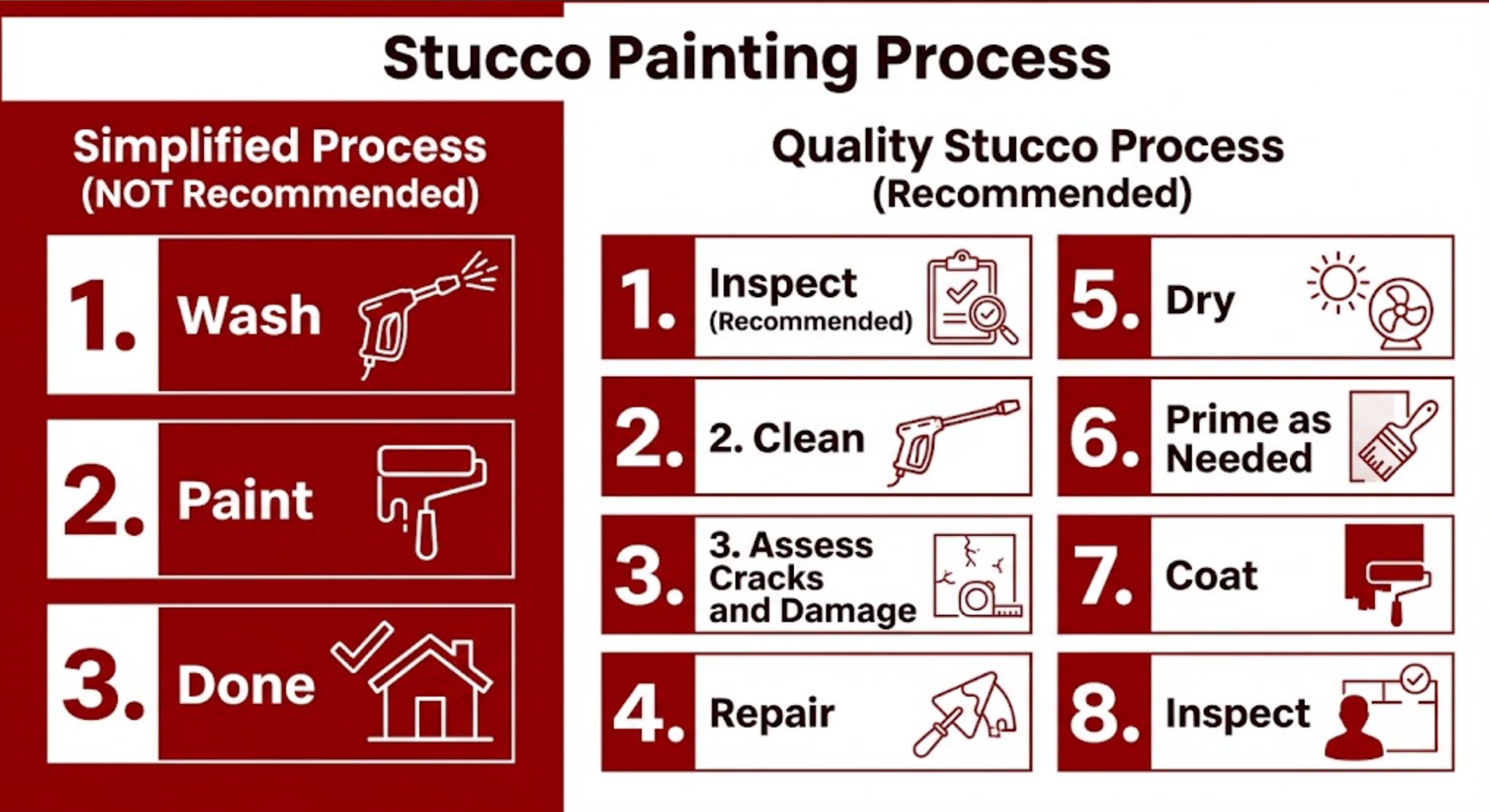
Skipping one of these steps can contribute to premature peeling, cracking, uneven coverage, or other paint problems.
Step 1: Inspect the Stucco Before Painting
Before any cleaning or painting begins, take a close look at the condition of the stucco. Not every crack means the same thing. Hairline cracks may be relatively minor, while larger cracks, recurring cracks, bulging areas, staining, or soft spots can indicate a more significant problem.
Pay particular attention around:
- Windows
- Doors
- Chimneys
- Roof lines
- Exterior penetrations
- Corners
- Areas where different materials meet
- Previous repair areas
You should also look for signs that moisture may be getting where it shouldn't. Dark staining, persistent dampness, efflorescence, deteriorating areas, or recurring paint failure can warrant further investigation before painting.
The goal isn't simply to identify what needs to be painted. It's to determine whether the surface is sound enough to receive a new coating.
Step 2: Clean the Stucco Thoroughly
Stucco can collect dirt, dust, pollen, mildew, algae, and other contaminants. Painting over those contaminants can interfere with adhesion and make it difficult for the new coating to perform properly.
Cleaning should be thorough but controlled. Stucco has a textured surface, and aggressive pressure washing can damage the material or force water into areas where it doesn't belong. The appropriate cleaning method depends on the condition of the stucco and the type of contamination present.
After cleaning, the surface needs adequate time to dry before repairs, priming, or painting begin. This is particularly important when moisture is already a concern.
Step 3: Evaluate and Repair Cracks
Cracks are one of the most important things to address before painting stucco. A small surface crack may be a relatively straightforward repair. Larger cracks or cracks that continue to return may require closer attention.
The repair material should be compatible with the existing stucco and appropriate for the size and location of the crack. Simply brushing paint over a crack is not a proper repair.
Likewise, filling a significant crack without understanding why it developed may only provide a temporary cosmetic improvement. If a crack is associated with movement, moisture, substrate problems, or deterioration behind the stucco, the underlying issue needs to be addressed first. This is why crack assessment is an important part of professional stucco painting.
What About Hairline Cracks?
Hairline cracks are common in many exterior masonry and stucco surfaces. Some may be primarily cosmetic, while others can provide an opening for water depending on their location and severity.
A flexible, masonry-appropriate coating may help bridge certain minor surface imperfections, but paint should not be considered a substitute for repairing cracks that require actual stucco repair.
If you're seeing numerous cracks across the exterior, or if individual cracks are becoming wider or recurring after previous repairs, it's worth having the surface evaluated before proceeding with a repaint.
Get the Perfect Finish for Your Home or Business
Let our experts help you choose the right paint. Get your free quote today!
Step 4: Address Moisture Before Painting
Moisture is one of the biggest considerations when painting stucco. Stucco is designed as part of an exterior wall system, and water can enter through cracks, failed sealants, openings, or other areas if the system isn't properly maintained. That means painting over a moisture problem isn't a solution.
In fact, applying a new coating before the underlying issue is resolved can lead to continued paint failure and potentially conceal a problem that needs attention. If any of the conditions below are present, the appropriate next step may be an inspection or stucco repair rather than immediately scheduling a painting project.
Look for warning signs such as:
- Persistent dark staining
- Bubbling or peeling paint
- Repeatedly damaged areas
- Efflorescence or white deposits
- Soft or deteriorated surfaces
- Cracks around openings
- Water staining
- Recurring problems in the same location
Step 5: Choose the Right Primer
Primer isn't automatically the same for every exterior surface. Stucco and other masonry surfaces can have different preparation and coating requirements depending on their condition, previous coatings, alkalinity, porosity, and the type of finish being applied.
A suitable masonry primer may improve adhesion and help create a more uniform surface for the finish coat. The correct product depends on the specific project. For example, a previously painted and sound stucco surface may require a different preparation approach than new or repaired masonry.
Manufacturers' requirements also matter. Some masonry coatings and primers have specific requirements regarding curing time, surface moisture, and substrate condition. A professional painting contractor should select the primer based on the actual condition of the stucco rather than automatically using the same primer used on wood or siding.
Step 6: Select a Stucco-Appropriate Exterior Coating
Choosing exterior paint for stucco involves more than picking a color you like. The coating needs to be appropriate for the masonry substrate and the home's environmental conditions.
Acrylic masonry coatings are commonly used for stucco, while elastomeric coatings may be appropriate for certain projects because of their flexibility and ability to bridge some minor surface imperfections. However, the best product depends on the existing stucco, previous coatings, moisture conditions, and the manufacturer's specifications.
One characteristic worth discussing with your painting contractor is breathability. A coating needs to work with the wall system rather than simply creating an impermeable layer over it. If moisture is already present behind the stucco, the answer is not necessarily to apply a more waterproof coating. The underlying moisture issue needs to be understood first.
Choosing a Color for a Stucco Home
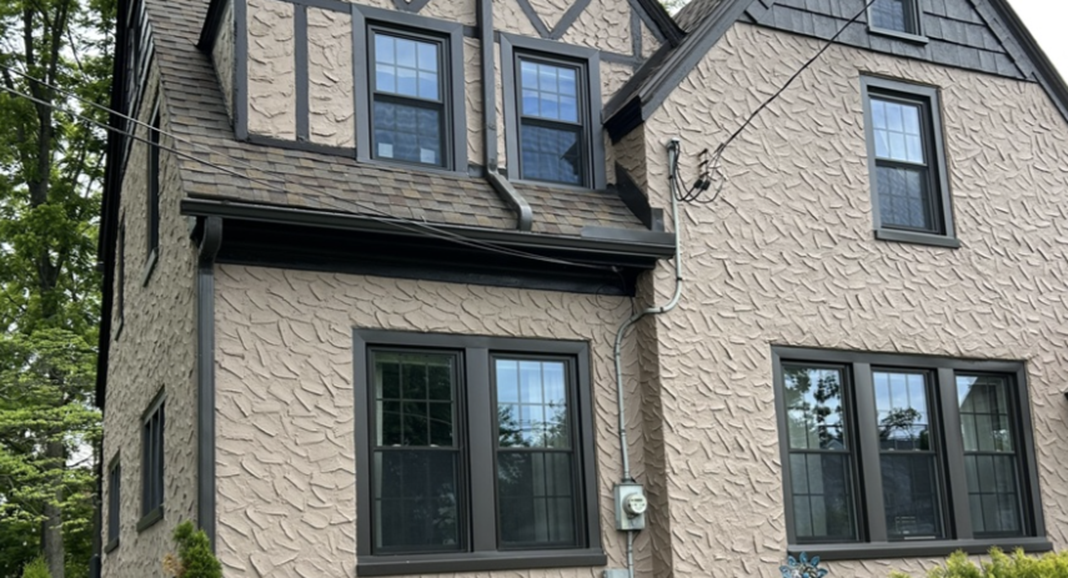
Now to the fun part! Once the technical considerations are addressed, it’s time to choose the color. Stucco's texture can look particularly good with colors that complement the architectural style of the home.
Popular approaches include:
Warm Neutrals
Cream, beige, taupe, and warm gray can create a traditional appearance and work well with stone, brick, wood accents, and landscaping.
Soft White
White or off-white can give stucco a clean, timeless appearance. Warmer whites often feel more natural on traditional Pennsylvania homes than extremely bright whites.
Gray
Gray can give a stucco home a more contemporary appearance. Warmer grays can work especially well when the property has natural stone or other warm materials.
Muted Green and Blue
Soft sage, olive, and blue-gray can add personality while still working with the natural surroundings common throughout Chester County.
Before making a final decision, test the color on the actual exterior. Stucco texture can affect how light reflects off the surface, and exterior colors can look significantly different in direct sunlight versus shade.
How Pennsylvania Weather Affects Stucco Painting
Pennsylvania's climate is one reason exterior preparation matters so much. A stucco home in Chester County may experience hot summer temperatures, humidity, heavy rain, autumn temperature swings, freezing winter conditions, and repeated freeze-thaw cycles. Those changes can place stress on exterior coatings and masonry surfaces.
Temperature and moisture also affect the painting process itself. Paint manufacturers have specific requirements for temperature, humidity, precipitation, drying, and curing conditions.
Should You Pressure Wash Stucco?
Pressure washing before painting can be helpful, but pressure washing requires more care than it does on some other exterior surfaces. Too much pressure or getting too close to the surface can damage textured stucco. Water can also be driven into cracks, openings, or vulnerable areas.
The appropriate approach depends on the surface condition, contamination, and equipment being used. A professional exterior painting contractor should understand that cleaning is preparation, not simply an opportunity to use as much pressure as possible. The goal is to remove contaminants without damaging the substrate.
When Stucco Needs More Than Paint
Sometimes a homeowner contacts a painting contractor because the exterior looks worn, but the correct solution isn't simply a new coat of paint.
If stucco is significantly cracked, deteriorated, bulging, or showing signs of moisture intrusion, additional evaluation may be necessary. This distinction is especially important for homeowners with older stucco systems or properties that have experienced recurring water-related problems.
Painting can refresh and protect a sound stucco surface. It should not be used to conceal significant damage. A reputable painting contractor should be willing to tell you when the surface needs repairs or further evaluation before painting rather than simply painting over everything.
How Long Does Painted Stucco Last?
A properly prepared and painted stucco surface should last anywhere between 5-10 years. There isn't one guaranteed lifespan for a stucco paint job.
Longevity depends on factors such as:
- The condition of the stucco
- Previous coatings
- Surface preparation
- Moisture exposure
- Sun exposure
- Paint and primer quality
- Application methods
- Ongoing maintenance
- Local weather conditions
Why Professional Stucco Painting Can Be Worth It
At Van Horn Painting, we approach exterior painting as a complete process rather than simply applying paint. Our work includes careful preparation, surface evaluation, appropriate repairs when needed, and the use of quality materials selected for the project.
For homeowners in West Chester, Chester County, the Main Line, and surrounding Southeastern Pennsylvania communities, that attention to preparation can make a meaningful difference in the finished result.
Planning a Stucco Painting Project in Pennsylvania?
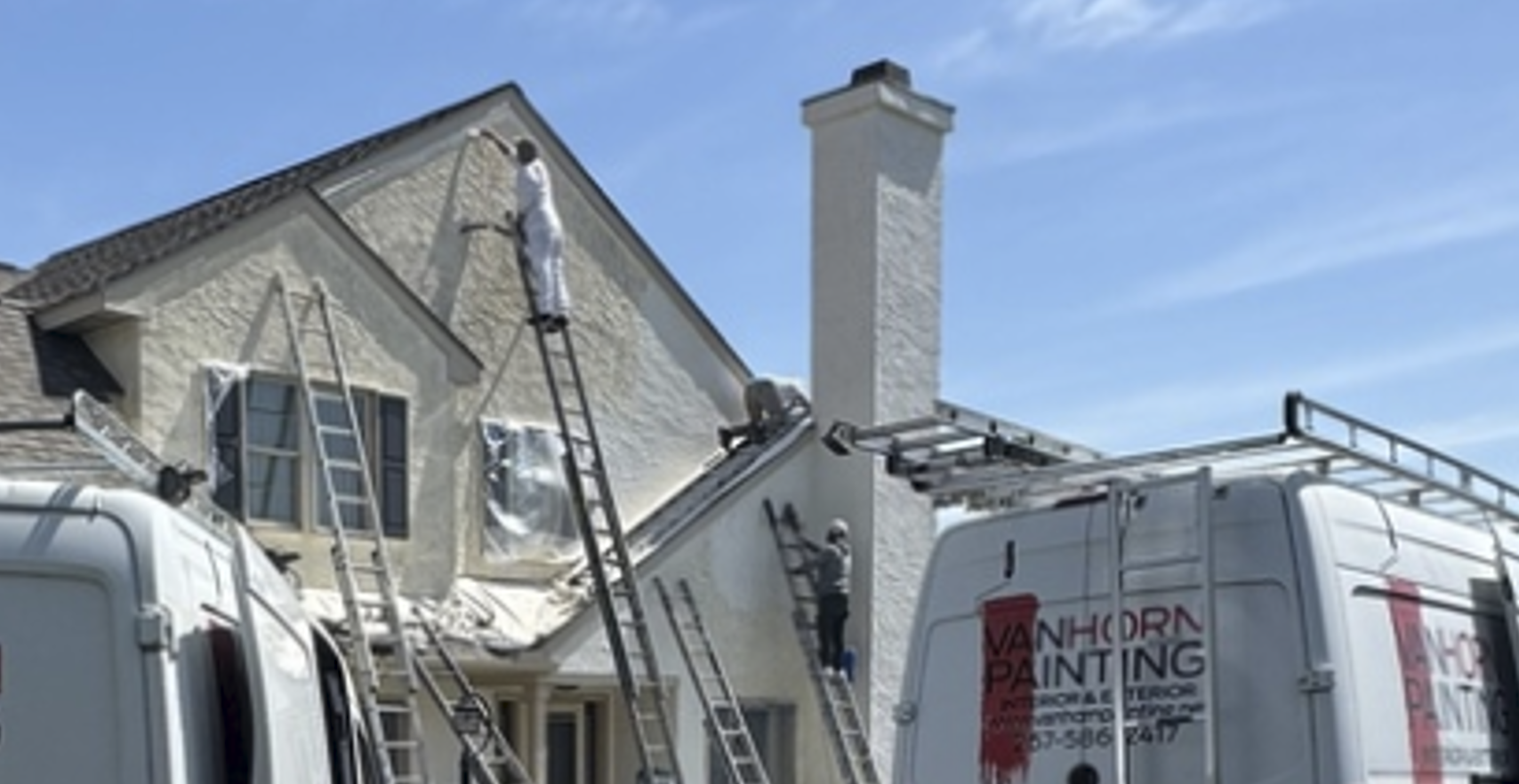
If you're considering stucco painting in West Chester, PA or anywhere in Chester County, Van Horn Painting can help you determine what your exterior needs and develop an appropriate painting plan.
Ready to give your stucco home a fresh look?
Contact Van Horn Painting to schedule a free consultation.
Written by
Brendon Van Horn
Founder & Owner, Van Horn Painting
Brenden VanHorn has spent over 20 years in the professional painting industry, mastering everything from advanced industrial coatings to historic home restoration across Southeastern Pennsylvania. He founded Van Horn Painting over 15 years ago to bring premium craftsmanship, reliable project management, and structural longevity to local property owners.
🛠️ Industry Credentials: